
b.smart
Videos/Stills (Renderings)
Infinity Island, 2021
Infinity Island, 2021

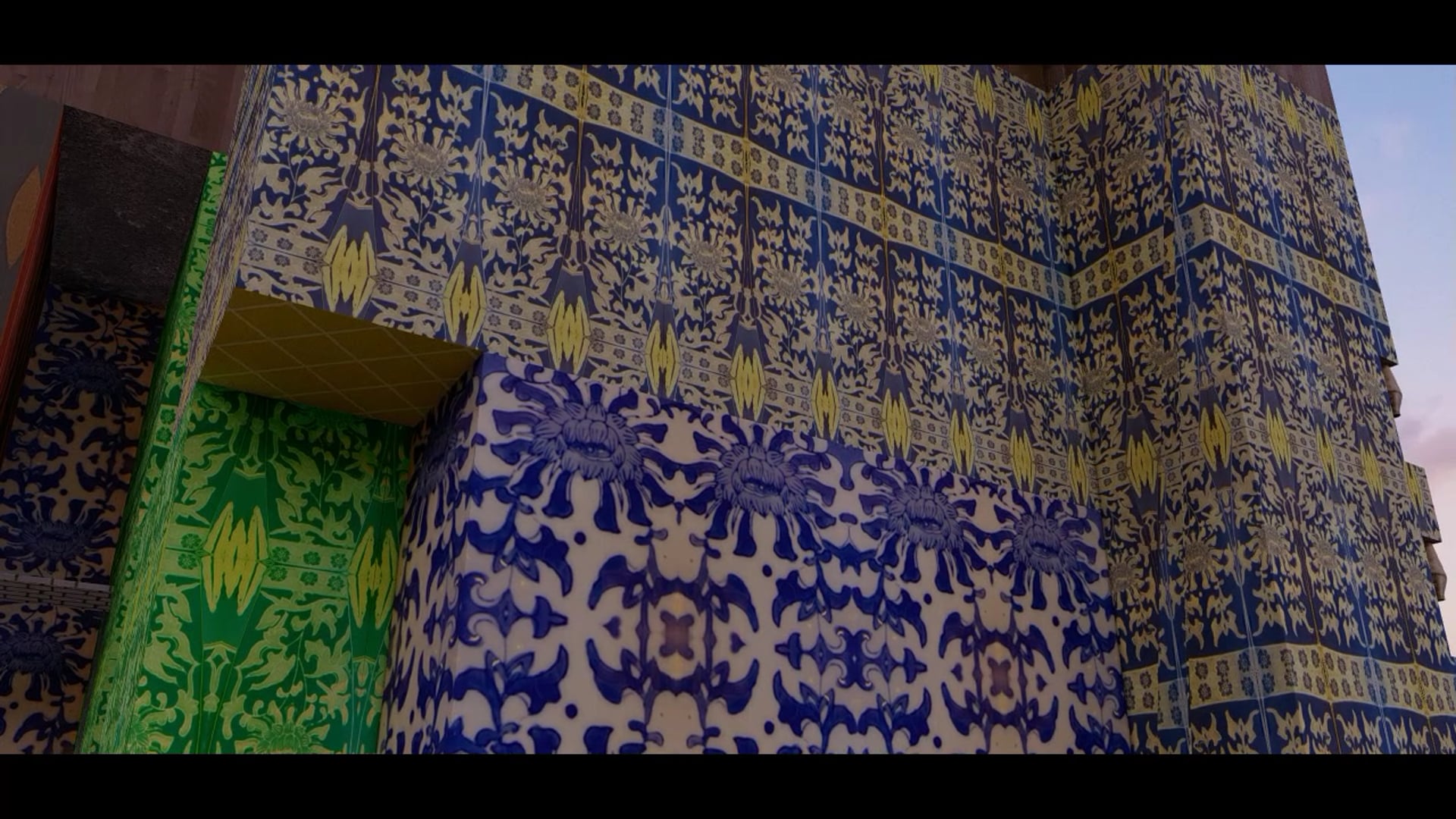
Infinity Island - Video 1 of 2
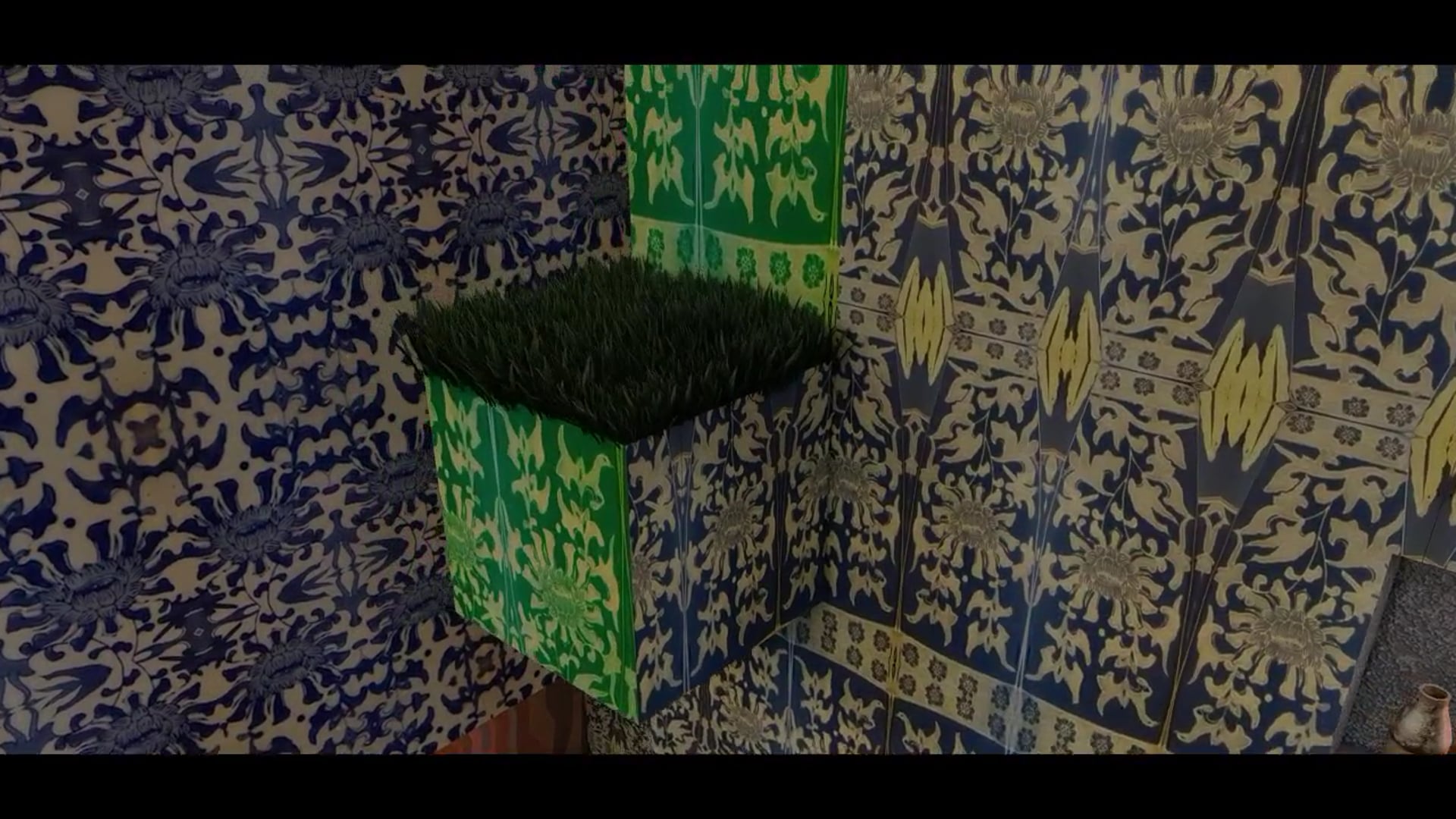
Infinity Island - Video 2 of 2
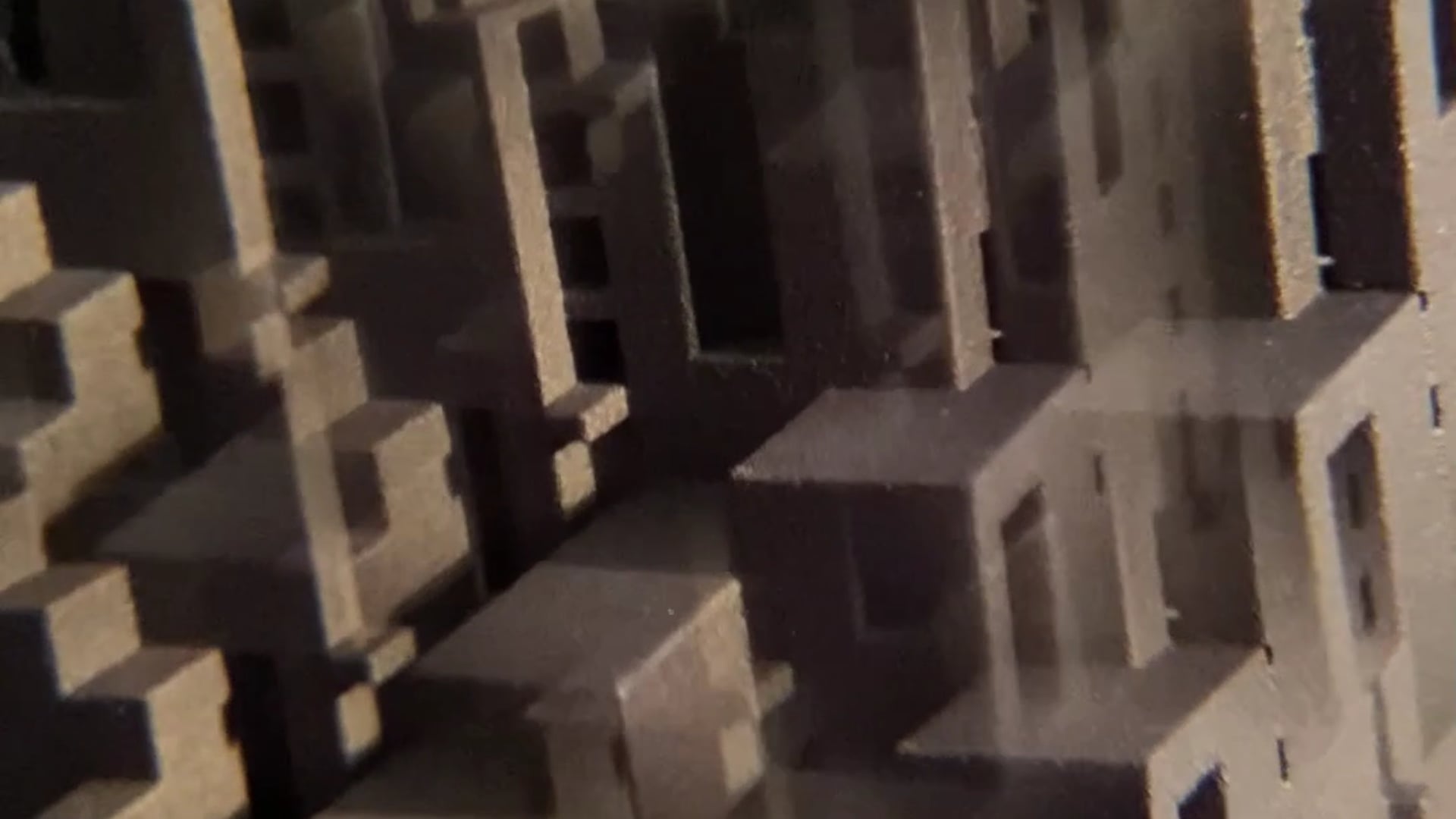
6X Infinite - 1
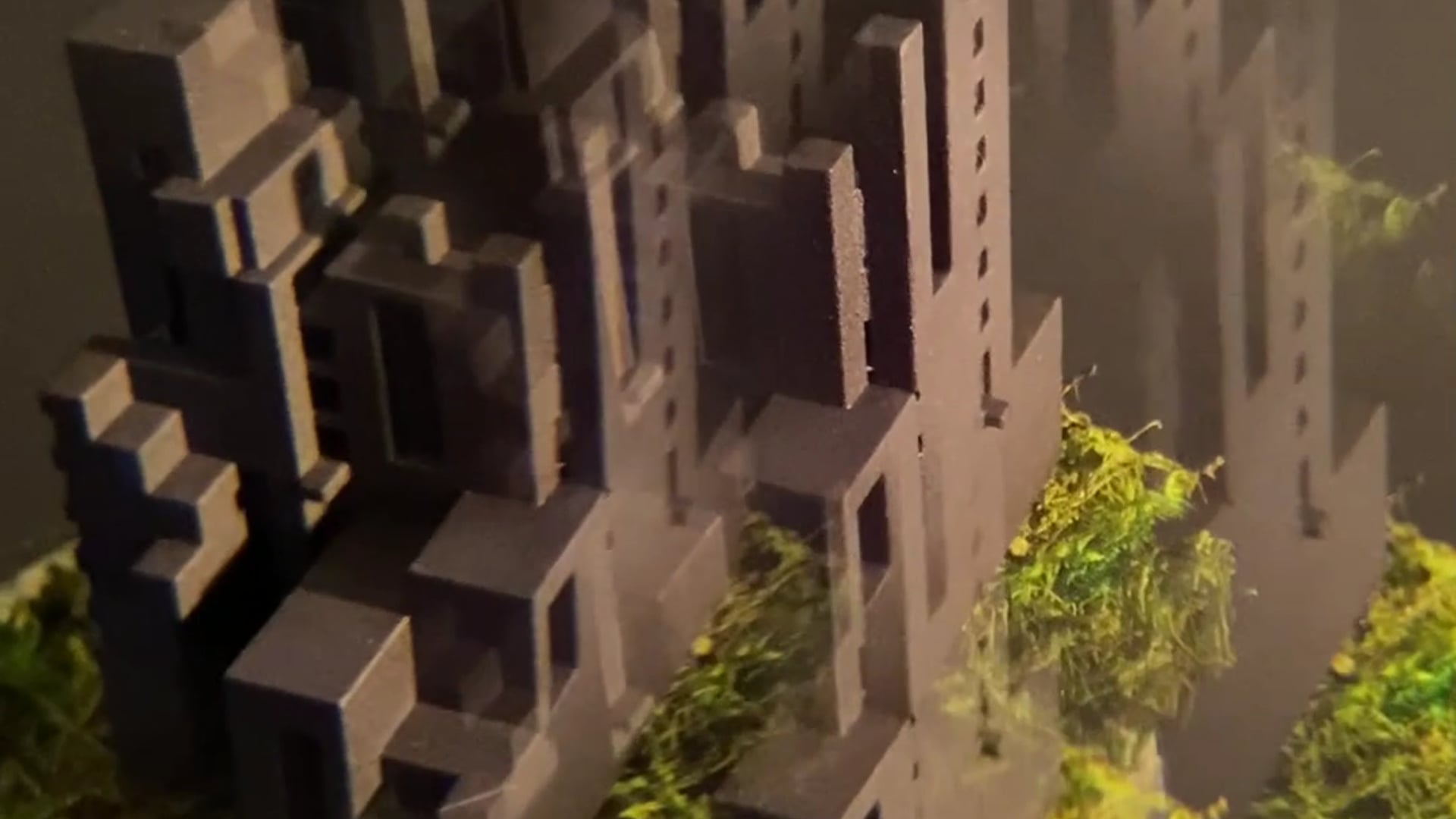
6X Infinite - 2
Infinity Island. 3D Model, Video and Images. 2021.
Infinity Island is a testament to my time as an architectural technologist, moving back into the realm of visual arts. Rather than fearing what the world might come to if machines took over, I found ways to modify my thinking and make the machine work for me. When I was working through these concepts it was just before AI started to really kick off and we as humans were right on the verge of a major shift, almost a worldwide surrender to the machine.
When I was working through Infinity Island, all parts of my artistic practice involved some type of digital undertaking. I was looking to move in the direction of dematerialization; knowing when to use "real" material when the affect is necessary to evoking an emotional connection with the viewer.
To further this process, I actualized the 3D model of Infinity Island printed as a resin 3D sculpture. Other iterations of the project are the sketches from this model that were traditionally (ink) printed and used as patterns for machine sewing. I want to explore infinite human potential as an extension to technology rather than seeing them as two opposing forces. Through play and experimentation, I am looking at the stages of processing and post-processing and applying machines/computers in ways that are familiar in ways that evoke nostalgia, but that continue to push boundaries. This was the beginnings of my digital journaling, a mindful approach in handling the struggles of tech; one of the biggest struggles being how quickly something become outdated while we try to keep up.
The retro-futuristic philosophies of the New Games Movement from the 1970s, came as a result of protesting the Vietnam war and eliminating the need for competition. This group of collaborators were encouraging people to understand their potential by working hard and working creatively. Writer George Leonard was involved in this movement and was the one who first coined the phrase “human potential”. Founder of Tiltfactor, Mary Flanagan explores the idea of how artists see games as “frameworks for thinking about culture.” (49) Infinity Island is largely influenced by paradoxical video game landscapes, and that my artistic practice is informed by an approach that is both intuitive and playful. The lack of humans in this nonhuman environment speak to the sublime, the serene and the ominous. I'm left questioning how we plan on approaching future design in landscaping and architecture. Are these interventions with the natural world in parallel or in over-consideration of the nonhuman?
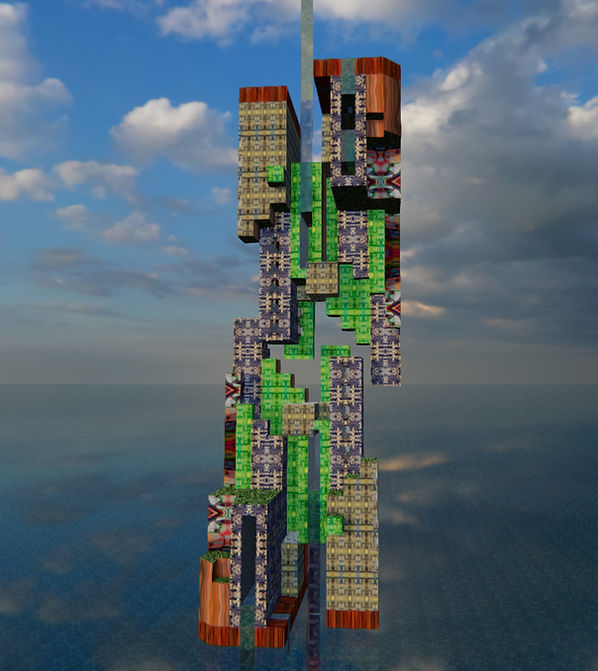
(Image 1) Infinity Island - Full model.

(Image 2) Infinity Island - detail.

(Image 3) Infinity Island - detail with the "Plantimals".

(Image 4) Infinity Island - detail.

(Images 1, 2, 3 & 4) Screenshots from Infinity Island, 2021.
Modeled in Sketchup, rendered through Vector extensions (Lumion). Edited with Photoshop.
(Image 5) Screenshot from Infinity Island, 2021. Modeled in Sketchup, featuring Alien Planet Birth painting in background.
(Image 5) Infinity Island - detail.
More on Infinity Island...
Infinity Island explores psychedelic art, architecture, surrealism, and physics.
This 3D model was inspired by video-game design, post-apocalyptic science-fiction/fantasy films, as well as real-world concepts that have either been realized or are still in progress. In Milan, architect Stefano Boeri’s prototypes for “smog-eating, vertical forests” were built, while in search of environmental solutions to pollution. Since the construction of the first of these plant-covered towers in 2017, many versions have also been conceived in China. (Gibson) Trickster practice is present in my experiments, with the use of photoshop; For me, it is an illusionist’s tool. I repurpose found objects and create digital tiles that cover the walls of my building prototypes. The tiles came from photographs of a Chinoiserie-style vase. Using replicas of replicas is important to my concept of the infinity.
“Postmodernism articulates this as the death of the subject, the repudiation of outside reality and meta-narratives, the illusion of language, and the failure of rationality to understand the world. It has led to an imagistic world overloaded with information where a crisis of representation means there are only copies, images for which no original exists (similacrum), resulting in endless commodification and consumerism. The unity of the self is replaced by multiple selves.” (From Understanding to Creating Curriculum. Grimmet & Halvorson, p246)
This research is driven by fascination with the hermeneutic loop, in the hope that Infinity Island reads as self-referencing. My imagination is alive with the playfulness of the inner child and due to an overactive mind, I tend to crawl up the walls: searching for connections and solutions. I want to dial into a particular childhood memory: laying on your back and pretending to walk on the ceiling, stepping over the thresholds at entryways. I am influenced by ideas of the geometrically sound, but physically impossible, like Maurit C. Escher’s.
Infinity Island is absurd in its existence - a sustainable building model in a post-human world: who is benefiting and at what point did we hand over our entire purpose of survival to machines? These instances allow the viewer to reflect on our participation on the planet, by presenting them with an imaginary one: vastly creative and yet incredibly mundane. All the issues that present themselves with the over-use of artificial intelligence. I want to bring us back to a process-focused practice, rather than one that simply glorifies the output.
“Animism is a combination of Shintoism and Buddhism and accepts that deity/kami exists in all beings. Shinto stresses relation and connectedness, emphasizing internal over external relations, where each part is reflected in the whole, and the whole is evident in every part.” (qtd. In Mumcu & Yilmaz, p5)
Still Images - Process Shots

(Image 6) Infinity Island - detail.

(Image 7) Infinity Island - detail.

(Image 8) Infinity Island - detail.

(Image 9) Infinity Model.
(Images 6, 7 & 8) Progress screenshot from Infinity Island, 2021. Modeled in Sketchup
featuring Alien Planet Birth painting in background.
(Image 9) Progress screenshot of Infinity Model, 2021. Built in Sketchup. Later used for 3D printing and CADmares pillowcase.
Works Cited/Sources of Inspiration:
Flanagan, Mary. “Creating Critical Play” Artists Re:Thinking Games. Eds Ruth Catlow, Marc Garrett, and Corrado Morgana. Liverpool: Liverpool University Press, 2010, pp 49-53.
Gibson, Eleanor. “Stefano Boeri designs ‘vertical forest’ city to eat up China’s smog”. Dezeen, 2017. https://www.dezeen.com/2017/06/28/liuzhou-forest-city-stefano-boeriproposes-plant-covered-city-to-eat-up-chinas-smog/. Accessed: March 4, 2021.
Grimmet, Peter P., and Mark Halvorson. “From Understanding to Creating Curriculum: The Case for the Co-Evolution of Re-Conceptualized Design With Re-Conceptualized Curriculum.” An essay review of Understanding Curriculum: An Introduction to the Study of Historical and Contemporary Curriculum Discourses. Pinar, W.F., Reynolds, W.M., Slattery, P., & Taubman, P.M. New York: Peter Lang, 1995/2003). Published by: Simon Fraser University, Surrey, BC, Canada. pp241-262.
Hartley, John. “Paradigm shifters: tricksters and cultural science.” Published by: ARC Centre of Excellence for Creative Industries & Innovation, QUT, Australia. 2010. pp1-18.
Mumcu, Sema, and Serap Yilmaz. “Anime Landscapes as a Tool for Analyzing the Human-Environment Relationship: Hayao Miyazaki Films.” Published by: Landscape Architecture Department, Faculty of Forestry, Karadeniz Technical University, Trabzon, Turkey. April 17th, 2-18.
“Natural History of the Enigma”. Eduardo Kac. Accessed Mar 3, 2021. URL: https://www.ekac.org/nat.hist.enig.html
“The Art of the Impossible: MC Escher and Me – Secret Knowledge.” YouTube, uploaded by Art Documentaries, September 2015, https://www.youtube.com/watch?v=f7kW8xd8p4s (Part 1), https://www.youtube.com/watch?v=1CYrGpd8k5w (Part 2).